

What are the differences between domestic and imported cardboard gluing machines?
Jan 09, 2026
Hey there! As a supplier of cardboard gluing machines, I've seen firsthand the continuous evolution in the cardboard packaging industry, as well as the diverse needs of manufacturers. One of the most common questions I get is about the differences between domestic and imported cardboard gluing machines. So, let's dive right into it and explore what sets them apart.
Cost
Cost is often the first thing that comes to mind when making a purchasing decision. Domestic machines usually have a significant price advantage. This is because they generally have lower production and transportation costs. For local manufacturers, sourcing domestic machines can mean lower upfront expenses, which is especially appealing for small - and medium - sized enterprises with tight budgets.
On the other hand, imported cardboard gluing machines are often priced higher. The costs of shipping, customs duties, and any additional import - related fees can all add up. But it's not just about the extra charges. Imported machines sometimes represent top - of - the - line technology, and manufacturers are often willing to pay a premium for that.
Technology and Innovation
In terms of technology and innovation, imported machines have long been regarded as leaders. They often come from countries with a long - standing tradition in machine manufacturing, where research and development are well - funded. These machines may feature the latest automation technologies, such as advanced sensor systems and precision control mechanisms. This can lead to higher production efficiency and better - quality output.
For instance, some imported Automatic Carton Folder Gluer Machines can handle complex gluing patterns with remarkable accuracy, reducing waste and improving the overall look of the final product. Check out Automatic Carton Folder Gluer Machine to see more about what high - end machines can offer.
Domestic machines have also made great strides in recent years. Local manufacturers are becoming more innovative, and they're starting to catch up with international standards. With a better understanding of the local market needs, they're able to develop cost - effective solutions that may not have all the bells and whistles of imported machines but are still very practical and effective.
After - Sales Service
When it comes to after - sales service, domestic suppliers have a clear edge. They are usually more accessible, with shorter response times. Since they're located nearby, technicians can quickly reach the customer's site in case of a problem. Moreover, spare parts are often more readily available, which means less downtime for the machine.
Imported machine suppliers may face challenges in providing timely after - sales support. Shipping spare parts can take a long time, and arranging on - site maintenance can be logistically difficult. However, some imported machine manufacturers do have well - established service networks in major markets, which can mitigate these issues to a certain extent.
Customization
Domestic cardboard gluing machine suppliers are often more flexible when it comes to customization. They can work closely with local customers to understand their specific requirements and make modifications to the machines accordingly. This is particularly beneficial for manufacturers with unique production needs, such as special - sized cartons or specific gluing techniques.
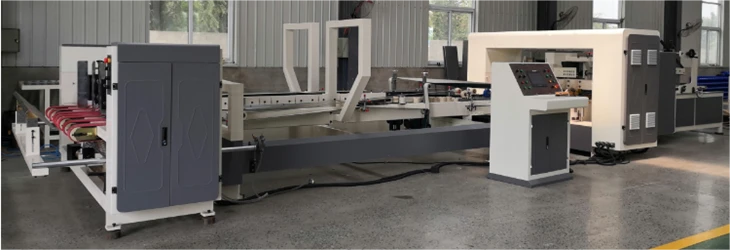

Imported machines, while offering high - end features, may be less flexible in customization. They are often designed to meet general market demands and may require significant time and cost to adapt to specific customer needs. But if you're looking for a one - size - fits - all solution with high - quality performance, imported machines can still be a great choice.
Quality and Durability
Imported machines are typically associated with high - quality construction and long - term durability. They are often built with top - notch materials and precision manufacturing processes, which ensures reliable operation over an extended period. This can be a major factor for large - scale manufacturers who rely on continuous production and can't afford frequent machine breakdowns.
Domestic machines have also improved their quality significantly. Many local manufacturers are now using high - quality components and following strict quality control procedures. While they may not always match the durability of imported machines, they still offer a good balance between quality and cost for many businesses.
Ease of Use
Domestic machines are generally easier to operate. The interfaces are often designed with local users in mind, using simple and intuitive controls. Instruction manuals and training materials are also usually in the local language, which makes it easier for operators to understand and use the machines.
Imported machines may have more complex user interfaces, especially if they are designed for a global market. While many of them offer multilingual options, the learning curve can still be steeper for some local operators.
Compatibility with Local Materials
Domestic cardboard gluing machines are designed to work well with local cardboard materials. Since local manufacturers are more familiar with the properties of domestic cardboard, the machines are optimized to achieve the best possible gluing results. This can lead to better adhesion and fewer production issues.
Imported machines may sometimes face compatibility issues with local cardboard. The cardboard used in different regions can vary in terms of thickness, texture, and composition. Some imported machines may need adjustments to work effectively with local materials.
Production Capacity
Imported machines are often favored by large - scale manufacturers due to their high production capacity. These machines are designed to handle high - volume production, with faster processing speeds and the ability to work continuously for long hours. They can keep up with the demands of large - scale packaging operations with ease.
Domestic machines come in a wide range of production capacities to suit different customer needs. While they may not always offer the same high - end capacity as imported machines, they are more than sufficient for small - to medium - scale production. For example, a domestic Mono Carton Pasting Machine can be a great option for a small - business packaging operation. Check out Mono Carton Pasting Machine to see how it can fit your production needs.
Safety Features
Both domestic and imported machines have safety features built - in, but the standards may vary. Imported machines usually adhere to international safety standards, which can be very strict. They may have advanced safety systems, such as emergency stop buttons, protective guards, and sensors to detect abnormal operations.
Domestic machines also have safety features, and the standards are constantly evolving. Local manufacturers are becoming more aware of the importance of safety and are improving their machines accordingly. However, there may still be some differences in the level of safety features compared to imported machines.
So, whether you should choose a domestic or an imported cardboard gluing machine depends on your specific requirements. If you're on a tight budget, need quick after - sales service, and want a machine customized to your local materials, a domestic machine may be the way to go. But if you're looking for the latest technology, high production capacity, and long - term durability, an imported machine could be the better choice.
If you're interested in learning more about our cardboard gluing machines, whether domestic or imported ones we can source, we'd love to have a chat with you. We can help you evaluate your needs and find the perfect machine for your business. Drop us a line, and let's start the conversation to find the best cardboard gluing solution for you!
References
- Industry reports on cardboard gluing machine market trends
- Interviews with cardboard packaging manufacturers and machine operators